

What the Smartest Shippers Are Doing Right Now (And You Should Too)
When times get tight, every dollar starts to matter a little more — and your freight budget is no exception. But here’s the good news: cutting costs doesn’t have to mean cutting corners.
Whether you’re shipping lumber, food products, or manufactured goods, getting proactive about your freight strategy now can save you from stress (and spend) down the line. This isn’t about fluff or trends — these are time-tested tactics that logistics pros use to weather market shifts and come out ahead.
Let’s get into it.

1. Consolidate Freight Where You Can — and Know When Not To
If you’re still sending half-full truckloads just to meet deadlines, there’s a better way. Freight consolidation can significantly lower your cost-per-mile, especially on recurring lanes.
But there’s a catch: it only works when your logistics partner knows what they’re doing. Consolidating poorly can cause delays, damage, or missed delivery windows.
Working with a broker who specializes in full truckload and surplus freight (like us) means you can take advantage of optimization without sacrificing service. Not every load needs to be milk-run efficient — but the right ones do.
👉 Learn more: What Is Freight Consolidation and When Should You Use It?

2. Avoid Long-Term Contracts When the Market’s in Flux
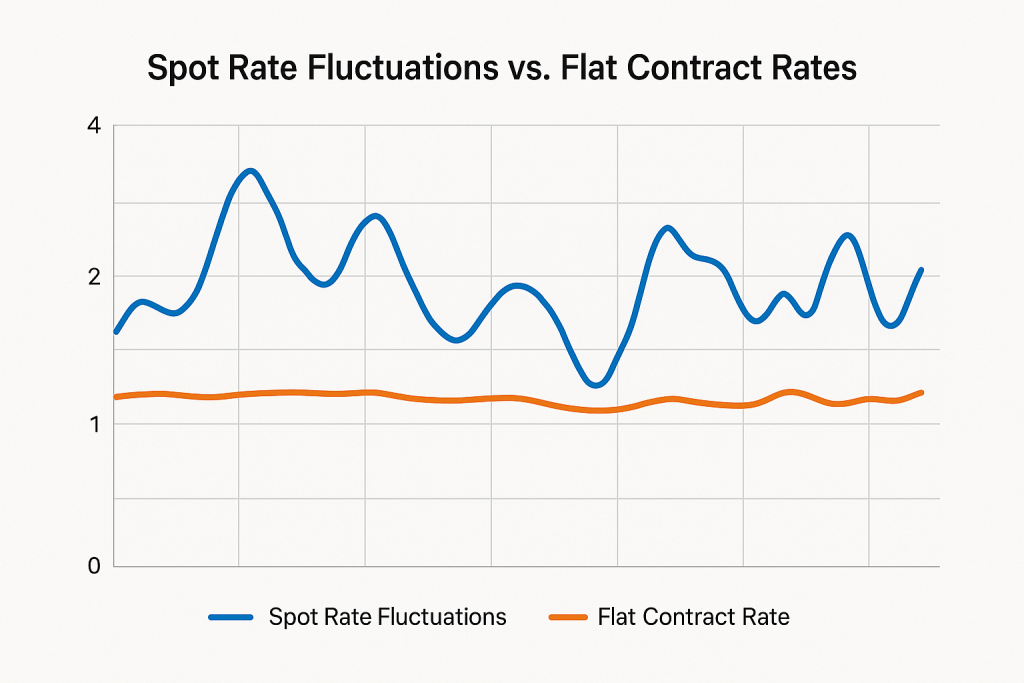
A lot of shippers lock in long-term rates “for stability” — but in a recession-sensitive market, that can backfire.
Right now, spot rates are more competitive than ever, and staying agile could save you thousands each quarter. If you’re working with a freight broker that actually keeps tabs on the market, you can ride the dips without committing to outdated pricing.
💡 Pro tip: Review contracts every 3–6 months, not once a year.
👉 Here’s why spot vs contract freight matters in uncertain times
3. Audit Your Accessorials — They’re Killing Your Margin
Fuel surcharges. Detention fees. Layovers. These add-ons can sneak up fast. If you’re not tracking them, you might be bleeding budget on bad habits or inefficient carriers.
Now’s the time to audit your freight bills — and not just to find overcharges. Look at patterns. Are certain shippers constantly delaying unloads? Are your routes consistently incurring layovers?
Work with someone who can flag the trends before they turn into invoices. At Moll Solutions, we track carrier performance on every load, so you can cut the drama (and the hidden fees).
👉 How to identify and eliminate unnecessary freight accessorials

4. Diversify Your Carrier Base (Yes, Even Now)
If you’re overly reliant on one or two carriers — you’re at risk. If one gets overbooked, reprices, or shuts down… so do your shipments. In a down market, this kind of dependency is dangerous.
A broker-backed strategy gives you access to a flexible, vetted carrier network without the overhead of sourcing new trucks every week.
Think of it as recession insurance. You still get the truck you need — even if your usual carrier can’t deliver.
👉 How carrier diversification protects your supply chain

5. Get Clear on What “Value” Actually Means
Cheapest doesn’t mean best — and best doesn’t always mean expensive. A broker worth working with should help you define what matters most to you: Speed? Communication? Real-time updates? Punctuality?
Once you’re clear on that, we build a strategy around it. No cookie-cutter quotes. No delays. No BS.
📞 Want a second opinion on your current freight plan? Let’s talk. We’ll give it to you straight.

Final Thoughts
A recession doesn’t have to wreck your logistics — but it will expose weak links. Getting smart now puts you ahead of the curve and gives you leverage no matter what the market does.
At Moll Solutions, we’re small by design — fast, responsive, and obsessed with your freight. Whether you’re booking weekly loads or just need help with surplus freight, we’ve got you covered.
Want help recession-proofing your freight?
Reach out here or email us at info@mollsolutions.com — we’ll send you a free lane audit and strategy report (no strings attached).