
Freight Fraud Is Spiking: Here’s How to Spot It and Stop It
Freight fraud isn’t just a niche issue anymore—it’s a full-blown security crisis. Carriers are getting impersonated. Identities are being stolen. Rates are being rerouted into criminal hands. And you’re often the one left on the hook.
Let’s break it down.
What’s Really Going On—and Why It Matters
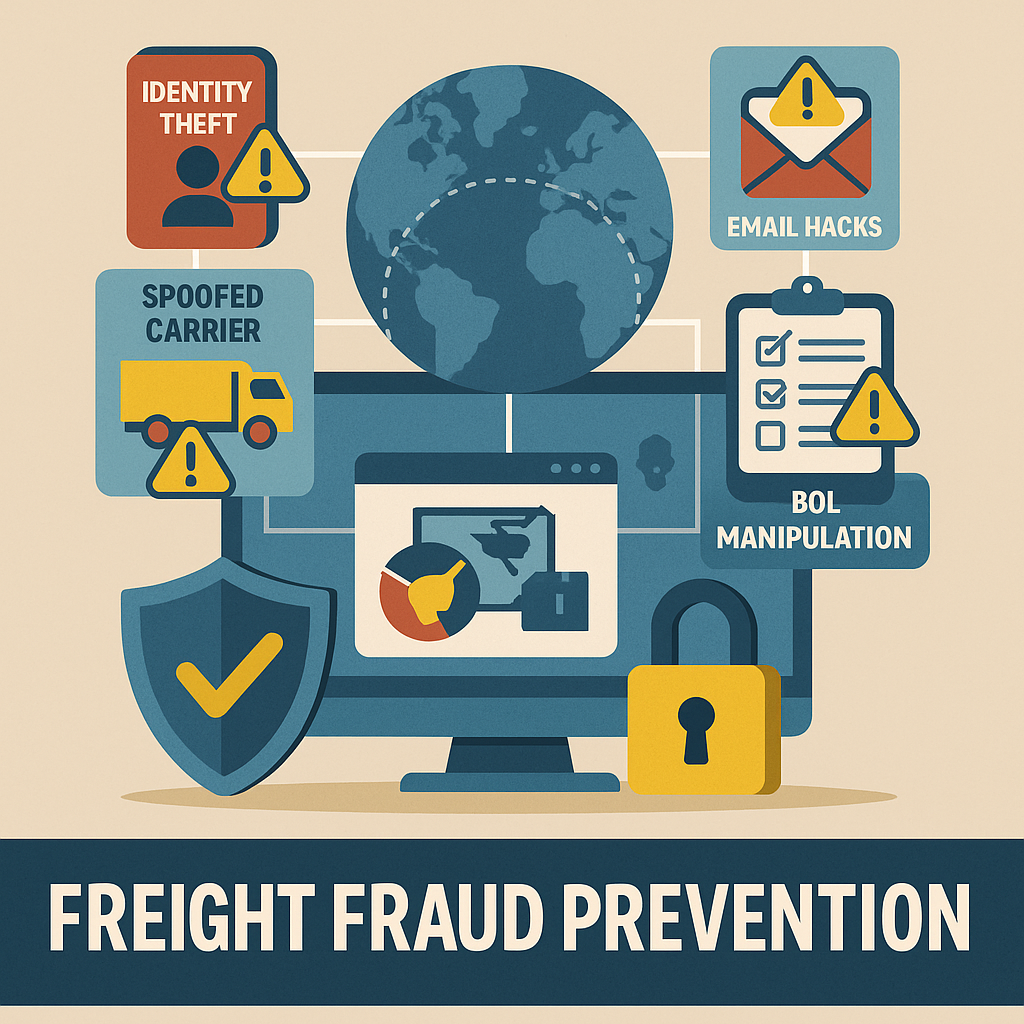
- Identity Spoofing and Fraudulent USDOT Numbers
Scammers are buying—or outright stealing—USDOT or MC numbers from other carriers. That lets them appear legitimate, bypassing basic vetting checks. - Hacked Inboxes and Phishing Attacks
Email fraud is climbing fast. Frauds are hijacking legitimate carrier or broker inboxes (“business email compromise” or BEC), intercepting rate confirmations, and quietly redirecting freight and payments. Highway blocked nearly 352,000 fraudulent emails just in Q1 2025. - Spoofed Phone Calls
Spoofing tools let scammers masquerade as trusted carriers by faking caller ID. Highway flagged over 42,000 suspicious phone attempts in Q2 2025. - Cargo Theft and Strategic Load Hijacking
Freight theft is surging—cargo theft in the U.S. increased by 26% in 2024, with identity-based theft now making up nearly one-third of all cargo theft cases. - BOL Manipulation (“Skimming”)
Some fraudsters deliver partial shipments—they falsify the Bill of Lading, mark fewer pallets as delivered, and disappear with the rest.
Real-World Callouts
- A freight brokerage was extorted after scammers hijacked a yogurt load using a stolen MC number—eventually demanding $40,000.
- Organized crime rings are impersonating carriers and intercepting shipments—like $135,000 worth of copper stolen from an Ohio broker.
How to Avoid Becoming a Victim
Here’s what you actually do to keep your freight—and your sanity—intact:
| Practice | What to Do |
|---|---|
| Double-verify USDOT/MC | Use FMCSA lookup tools directly, not via email attachments. |
| Require MFA on all carrier communications | Block phishing by enforcing multi-factor authentication on email portals. |
| Always call back using verified numbers | Don’t trust caller ID alone—confirm by calling the number registered in your system. |
| Audit the BOL in real time | Count pallets before sign-off. Take photos. Match them to your system immediately. |
| Lock down your carrier onboarding | Include periodic audits and flag suspicious ownership changes. |
| Use trusted fraud analytics tools | Consider platforms like Highway’s Identity Engine and CrossClassify to catch spoofing and changes. |
Bottom Line
Fraud isn’t random anymore—it’s coordinated, technical, and costly. You’re not paranoid to check twice. A stolen identity, bogus email, or phony load assignment can cost you tens of thousands in lost freight fees, stolen goods, or insurance lapses.
At Moll Solutions, we build every load with carrier ID verification, real-time tracking, and audit logs—because freight that moves fast isn’t worth anything if it’s not yours.