

Why Freight Class Is Screwing Up Your LTL Shipments (And What To Do About It)
Getting hit with surprise charges on your LTL shipment? Nine times out of ten, freight class is the culprit—and most small shippers have no idea what it even means.
Here’s the truth: understanding freight class can save you serious money, prevent delays, and keep your freight moving without headaches. Let’s break it down the way your carrier wishes you understood it.
What Even Is Freight Class?
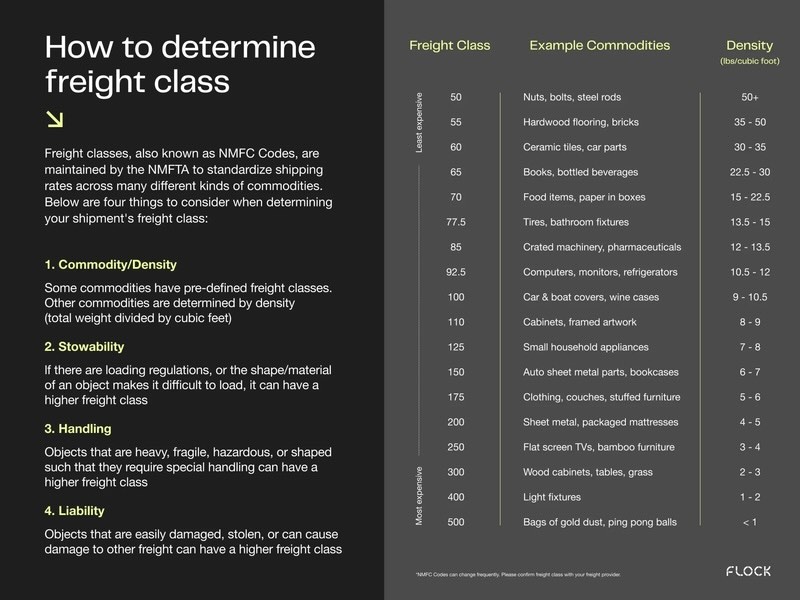
Freight class is a numeric code (from 50 to 500) used in less-than-truckload (LTL) shipping. It affects your pricing, and it’s based on four factors:
- Density: how heavy it is relative to size
- Stowability: how easy it is to fit in a truck
- Handling: whether it needs special treatment
- Liability: how likely it is to get damaged or stolen
For example, a dense block of metal may be Class 50. A big, light, fragile sculpture? That might be Class 400.
The higher the class, the more expensive the shipment. That’s because it’s harder or riskier to haul.
Where Most Shippers Go Wrong
Mistake #1: Guessing or copying the wrong class
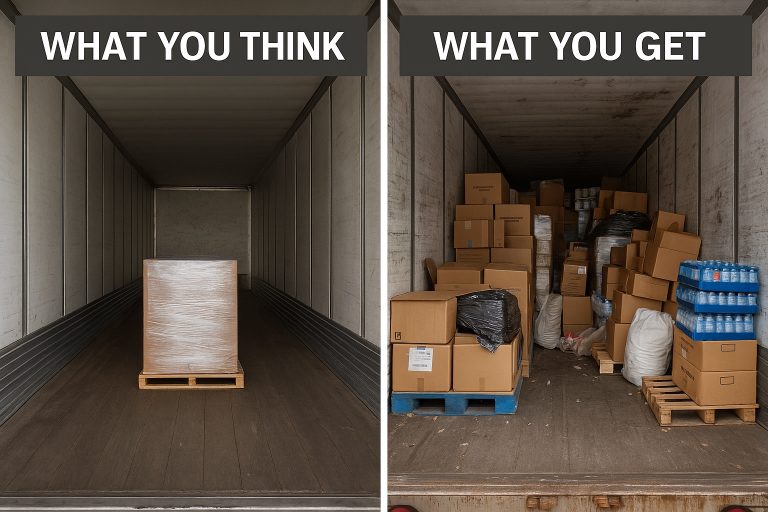
Too many people just slap on a freight class based on what they shipped last time—or worse, what they think it is. Even if it worked before, that doesn’t mean it’s right now.
Mistake #2: Not using accurate dimensions and weight
Freight class is density-based. If you don’t measure your palletized load correctly (with packaging), you’ll get reclassed later—and billed for it.
Mistake #3: Thinking it doesn’t apply to them
Freight class isn’t optional. If you’re shipping LTL and you get it wrong, you’ll pay the price.
How Reclassing Happens—and Why It Costs You
When your shipment gets to the terminal, the carrier might remeasure and realize the class is off. At that point:
- They change the class
- Adjust the rate
- Add a reclass fee (yep, that’s on top of the higher cost)
- Possibly delay delivery
Some carriers do this automatically. Others flag it for the broker or shipper. Either way—you’re stuck with the bill.
How to Avoid Freight Class Headaches
- Use a freight class calculator
Several LTL carriers and tools (like Freightquote or Freight Class Calculator) help you estimate the right class. You’ll need dimensions and weight after packaging.
- Don’t rely on guesswork or Google
Just because your product is “similar” to someone else’s doesn’t mean it ships at the same class. Look up the NMFC code if possible (National Motor Freight Classification).
- Ask your broker
At Moll Solutions, we double-check freight class based on real specs, not guesswork. We’d rather fix it up front than let you eat a $200 surprise.
- Be honest with details
Trying to cheat the class won’t end well. Carriers have laser measuring systems now. You will get caught.
Should You Always Ship LTL?
Not always. LTL can be more cost-effective than full truckload (FTL), but only when:
- Your freight is palletized and stackable
- Timing is flexible
- Your class is correct and won’t be re-billed
- You’re not moving sensitive, high-value cargo
If not? You might be better off with dedicated or partial truckload—even if the base quote is higher.
Bottom Line: Get the Class Right, or Pay Later
Freight class isn’t just a number—it’s a price tag. Get it wrong, and you’ll pay in money, time, and frustration.
At Moll Solutions, we work with shippers who want things done right the first time. No games, just freight that moves the way it should.